What Does Blue Square With Yellow Lines Mean
Our Logo
The logo — unveiled in autumn 1995 — helped usher in a new era for the organization, which had previously been known as the Human being Rights Entrada Fund.
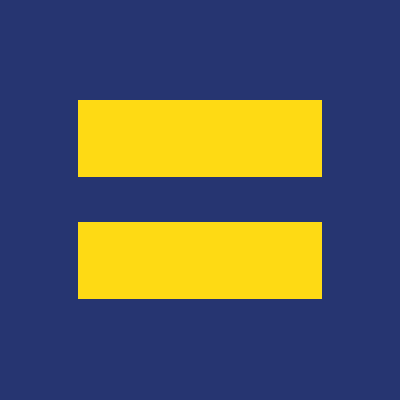
The Human Rights Campaign logo is one of the nearly recognizable symbols of the lesbian, gay, bisexual, transgender and queer community. It has get synonymous with the fight for equal rights for LGBTQ+ Americans.
The logo — unveiled in fall 1995 — helped usher in a new era for the organization, which had previously been known every bit the Human being Rights Campaign Fund. When HRCF was founded in 1980, it was primarily a fund for supporting pro-fairness congressional candidates. The rebranding in 1995 announced to the country that, in the words of so- Executive Director Elizabeth Birch, "Nosotros're so much more a fund."
The logo was the last touch on a consummate reorganization of HRC. In addition to the well-established lobbying and political action committee capabilities, new Foundation programs — including the Workplace Project and Family Project — were added. All of HRC's inquiry, communications, marketing and public relations functions were broadly expanded. HRC began a long period of robust growth and became respected as one of the largest and most effective mainstream advocacy organizations in the country. As Birch would often say, "A logo is only as meaningful as the difficult work and standard of excellence information technology represents."
The new proper name and logo reflected the wider goals and influence of the organization, which grew in forcefulness to now spread the message of equality to every corner of the land.
The genesis of the HRC logo began with Birch's vision for a unifying message for the arrangement. Birch formed a committee that included electric current and former HRC senior staff such as Cathy Nelson and David Smith and board members and marketing talents such every bit Lisa Sherman, Wes Combs and Bob Witeck. She besides enlisted the help of marketing and blueprint firm Stone Yamashita. Birch had worked with Keith Yamashita while at Apple tree Computer and admired Robert Rock'south clean and heady design style. Susan Schuman, as well from Apple, joined Birch at HRC and helped guide the new positioning and branding efforts.
Stone Yamashita created 10 potential designs for the logo, some of which were variations on the old torch logo. Birch was fatigued to one depicting a xanthous equal sign inside of a blue square. Though information technology was the second-favorite choice amid focus groups, Birch and her committee insisted on the simple, bold design.
After four months of piece of work to reinvent the system's branding, the logo was introduced with new HRC letterhead, business cards and a campaign T-shirt. (The shirt is yet sold in HRC Shops and on shop.hrc.org.)
The logo started popping up everywhere. In doing research for a bumper-sticker purchase order, staff fellow member Don Kiser, now HRC's artistic director, learned that a square logo — unlike from the traditional rectangular bumper sticker — would cost merely pennies to produce. The logo sticker was — and still is — distributed to new and prospective members who, in turn, help draw attending to HRC's work by placing the sticker on their cars and windows.
Before long, the HRC logo was as visible at pride celebrations and other LGBTQ+ events as the iconic rainbow flag. Today, the HRC logo can exist spotted the world over, from cars in Japan to the backpacks of hikers in Tibet.
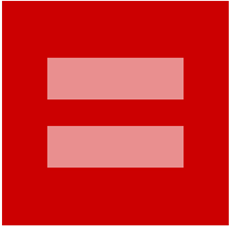
In late March 2013, equally the U.S. Supreme Courtroom was hearing arguments in two marriage equality cases, HRC shared a blood-red version of its logo – selected because the color is synonymous with honey - on Facebook and Twitter and asked supporters to change their profile photos to testify their back up. The entrada went viral, and celebrities such as George Takei, Beyonce, Martha Stewart and others helped draw attention to the motion. Millions of people shared the logo, countless memes were created in response, and Facebook saw a 120 percent increase in profile photograph updates. The Internet was brimful in scarlet and displayed the growing back up for spousal relationship equality in the U.South. and the earth. Today, the red HRC logo continues to be used by HRC to promote LGBTQ+ rights.
The campaign put the spotlight on HRC and spread awareness about the system and its original blueish and yellow logo. Whether the logo is seen on a T-shirt, an HRC publication, a lawmaker's lapel or as a properties for a historic oral communication by the president of the United States, it sends a bulletin that the Human Rights Campaign and its more than 3 million members and supporters will remain vigilant in the fight for LGBTQ+ equality.
Love conquers hate.
Wear your pride this yr.
100% of every HRC trade purchase fuels the fight for equality.
Source: https://www.hrc.org/about/logo#:~:text=The%20Human%20Rights%20Campaign%20logo,equal%20rights%20for%20LGBTQ%2B%20Americans.
0 Response to "What Does Blue Square With Yellow Lines Mean"
Postar um comentário